




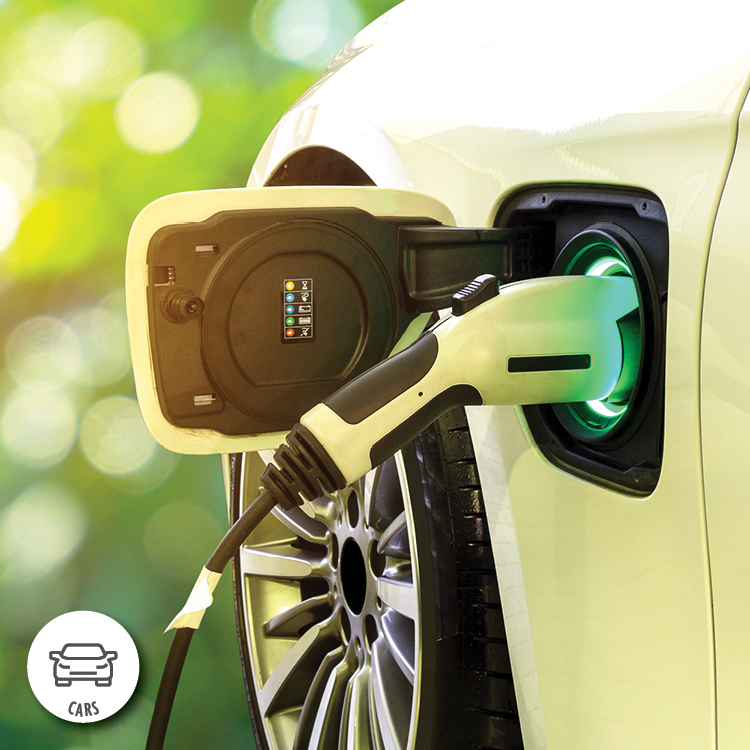
Q: With gas prices soaring and expected to continue climbing into the foreseeable future, I’m wondering if this is a good time to consider purchasing an electric car. Should I buy an electric vehicle now?
A: Thousands of drivers are grappling with this question as gas prices peak. While an electric vehicle (EV) might be the right choice for many, there are lots of variables to consider before making this decision. Here’s what to know about electric cars before going this route:
What are some pros of owning an electric car?
The most obvious and prominent advantage of owning an electric vehicle is saving on fuel costs. Driving a car that runs on electricity instead of gasoline means saving money on a large expense category of your budget, month after month. Of course, the higher the cost of gas, the more you save. Right now, with most drivers experiencing pain at the pump, going electric is more popular than ever. Another budgeting bonus to consider is the fact that electricity costs tend to be far more stable than gasoline prices.
Another well-known advantage of driving an electric-powered car is the environmental benefits. Lower fuel emissions means a smaller carbon footprint on the environment, which is always a good thing.
Yet another advantage to EVs is their superior efficiency. EVs can convert more than 77% of their electric energy to power their wheels. In contrast, gas-powered cars can only convert 12-30% of the fuel stored in their gas tanks into driving power.
What are some disadvantages of owning an electric vehicle?
There are several disadvantages to owning an EV to be aware of before making a purchase.
First, it’s important to note that the battery of every EV may need replacement sometime down the line. Federal regulations require automakers to cover the battery of their vehicles for a minimum of eight years or 100,000 miles, whichever comes first. Some automakers also cover battery degradation, which is when a full charge powers fewer miles than it should. However, if the battery dies after the warranty expires, the cost of replacing it, which can run from $5,000 and $16,000, will need to be covered by the owner. The good news is that, as EVs become increasingly more popular, they are also becoming less expensive to manufacture and the prices of their parts are decreasing as well. In addition, automakers are working to manufacture EVs with batteries that last longer than most drivers will own the vehicle.
Another disadvantage to owning an EV is being limited in the number of miles you can drive before you will need to recharge your vehicle. The number of miles you can drive on a full charge, also known as the vehicle’s range, will vary with each car. Most EVs will average 250 miles of range. While this will cover most people’s daily commute, road-tripping in an EV will take some planning. Luckily, as electric cars become more commonplace, finding a charging station on a major highway is becoming a non-issue. However, if you plan to take many road trips with your EV, you may want to purchase a car that is capable of fast charging so you don’t have to spend hours at a charging station every few hundred miles on your trips.
Can I charge my electric vehicle at home?
Yes, you can charge your EV at home. Plug it in at night, and it’ll be ready to go in the morning. How’s that for convenience?
However, before ordering a Tesla, it’s good to be aware that the standard 110-volt wall outlet (Level 1 charging) is relatively slow, adding approximately four miles of range per hour. If you depleted a full 250 miles of range, it can take several days to fully recharge your vehicle. If you’ll be charging your car outside, be sure to verify your charging cord is designed for outdoor use.
Most EV owners hire an electrician to install a 240-volt outlet in their garage. This allows for Level 2 charging, which can add 25 miles of range per charging hour. Be sure to get a reliable quote to know the cost of such work.
How much does electricity cost?
Electricity, though much cheaper than gas, typically isn’t free. The exact price will vary by state, so check how much electricity will cost in your own home state before purchasing an EV.
To save more on charging your EV, consider these points: Charging an EV at home is typically less expensive than charging it at a public charging station – unless, of course, you find one of those rare cost-free public charging stations. In addition, charging your EV overnight, or on the weekend will cost less than charging it at peak times, such as weekday afternoons and evenings. You may want to reach out to your utility company to learn exactly what it’ll cost you to charge your vehicle. Some companies offer special plans for EV owners, so be sure to inquire about that as well.
What kind of maintenance will my electric vehicle need?
A big bonus of owning an EV is having lower maintenance costs. Electric motors have fewer moving parts than gasoline engines. This makes EVs far easier to maintain than their gas-powered counterparts. In addition, many car parts, which generally need replacing after a while – like spark plugs, filters and oil – are irrelevant to EVs. This means fewer trips to the mechanic and significantly lower maintenance costs.
How much will an electric vehicle cost?
All the convenience and long-term savings of an EV comes at a high price, and most of them have a higher starting cost than gas-powered cars. Of course, there’s a large range, starting with the Nissan Leaf at just $27,400 and going all the way up to the Tesla Model 3 at $58,990.
Fortunately, there are many government-sponsored incentives for purchasing an electric car. These incentives are offered on the federal, state and local government levels, so be sure to see what’s available before completing your purchase. It’s important to note, though, that many of these incentives are not open to every buyer and every kind of EV. For example, the most well-known incentive, the Federal Qualified PEV Tax Credit, which offers up to $7,500 off the MSRP of qualified EVs, is only available for the first 100,000 EVs an automaker manufacturers and is no longer available for the purchase of any Teslas.
If you’re looking to finance an auto loan for your new electric car, look no further than Freedom FCU! Our auto loans offer low interest rates, easy payback terms and a quick approval process. Call, click, or stop by to discuss available options!
Your Turn: Have you recently purchased an electric car, or made the decision to hold onto your gasoline-powered vehicle? Tell us what drove your decision on Facebook, Twitter or Instagram! @FreedomFedCU