Free Apps for Kids

World of Cents

April is usually Youth Month here at Freedom Federal Credit Union.  Once our normal operations resume, we will be rescheduling the promotion.  After several weeks in lockdown, you may be ready to pull out your increasingly gray hair.  To help out, we’ve compiled a list of free educational apps for kids to occupy them and give mom and dad a breather.

7 Free EDUCATIONAL APPS for kids

Scholastic The leading educational company has set up a “Learn From Home” website with free daily courses for kids ages K-12.

Zoom The popular video conferencing app is offering free service during the coronavirus outbreak. It’s also lifted its 40-minute limit on conferences, making the app a perfect choice for hosting your child’s classroom learning, or even a video chat with friends.

Neoufitness Help your kids stay fit through the pandemic with this super-fun fitness app for kids ages 4-12. The app offers a selection of 10-20 minute exercise classes and is free for the first 30 days.

Issasedibleadventures If your child is an aspiring chef, they’ll love this free cooking app, in which gamers race to collect ingredients from around the world and use them to create a requested cross-cultural dish.

SmartMusic The popular music practice app is offering free service through June 30 for all schools impacted by COVID-19. The app includes practice tools like a tuner, metronome and fingerings, along with an extensive music library and immediate assessment of pitch and rhythm.

DuckDuckMoose The adorable educational app for kindergartners and preschoolers makes learning super-fun! The app is always free and features a delightful array of characters, a brightly colored interface, and a special focus on maps and puzzles.

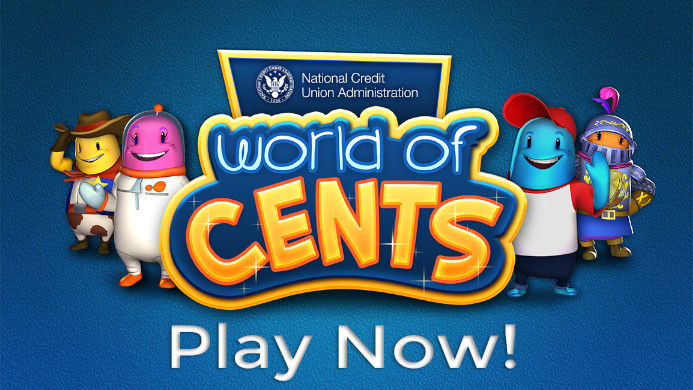
World of Cents The NCUA’s free money app is the perfect way to teach your kids about personal finances. They’ll learn all about earning, spending, saving and more through the app’s fun games designed for kids ages 5-10.

Your Turn: How are you keeping your kids busy during the pandemic? Share your best ideas with us on Facebook, Twitter or Instagram! @FreedomFedCU

Your Complete Glossary of Financial Terms Related to COVID-19

Financial Terms Related to COVID-19Some of the financial terms flying around in the wake of the recently approved Coronavirus Aid, Relief and Economic Security (CARES) Act may be confusing. We have broken down some of the key components and how they relate to the COVID-19 pandemic.

Deferred interest 

What it means: Deferred interest is when interest charges on a loan or a line of credit are deferred or delayed for a specific period of time. The interest will usually accrue, or continue to grow, during such a deferral period.

How it relates to COVID-19: Many major credit card companies are allowing consumers to defer interest on their March and April payments due to the coronavirus. Also, as part of the Coronavirus Aid, Relief and Economic Security Act (CARES), lenders must stop collecting payments for federal student loans through Sept. 30. Interest will then be deferred throughout these six months and will not continue to accrue. [Freedom Federal Credit Union is allowing our members to defer interest up to 90 days on Anything Loans and are working with members on an individual basis as needed.] 

Forbearance

What it means: Forbearance is the delaying of a payment on a loan, such as a mortgage or auto loan. Interest generally continues to accrue. Any missed payments are either moved to the end of the loan’s term or are collected when the period of forbearance is over.

How it relates to COVID-19: The Federal Housing Finance Agency offered payment forbearance to homeowners affected by COVID-19, allowing them to suspend mortgage payments for up to 12 months. These loans, funded by lenders Freddie Mac and Fannie Mae, account for 66 percent of all home loans in the country. Many private lenders are offering homeowners forbearance at this time as well. Some state governments have also instructed all mortgage lenders in their states to offer forbearance for three months. [At this time, Freedom Federal Credit Union is offering payment forbearance on Anything Loans up to 90 days and are working with members on an individual basis as needed.] 

Freelancers

What it means: Freelancers are self-employed workers who sell their work or services by the hour or by the job.

How it relates to COVID-19: Under the CARES Act, freelancers are eligible for unemployment insurance.

Furlough

What it means: A “furloughed” worker is someone who is “out on furlough” – or temporarily laid off without pay.

How it relates to COVID-19: Millions of workers are now on furlough as companies temporarily shut down for complying with social distancing mandates, statewide orders to “shelter in place,” or due to a lack of business during the pandemic. Furloughed workers are eligible for unemployment insurance.

Gig workers 

What it means: Similar to freelancers, a gig worker, or independent contractor, enters into a formal agreement with a company to be on-call when the company needs to provide service to its clients, such as rideshare drivers working for Lyft or Uber.

How it relates to COVID-19: Under the Coronavirus Aid, Relief and Economic Security Act (CARES), gig workers are eligible for unemployment insurance.

Stock buyback

What it means: Also known as a share repurchase, a stock buyback refers to a company’s reacquisition of its own stock. Stock buybacks are common when stocks are falling as the company will use its cash reserves to buy outstanding shares for reducing the number of available shares on the market.

How it relates to COVID-19: The CARES Act has prohibited stock buybacks for any individual while they are receiving government funds and for a full year for companies receiving federal loans at this time.

Unemployment insurance 

What it means: Unemployment insurance offers laid-off workers partial compensation while they are seeking a new job. Eligible candidates must have been laid off through no fault of their own and be actively seeking a new position or undergoing job training. Weekly benefits are determined by each state, generally capping at 60 percent of the worker’s former income.

How it relates to COVID-19: With millions of workers temporarily or permanently out of a job, unemployment benefits have been greatly expanded. Restrictions and qualifications have been loosened and an additional weekly $600 will be added to most checks for up to four months.

Your Turn: Have you learned any new financial words since the coronavirus outbreak? Tell us about it on Facebook, LinkedIn,Twitter, or Instagram.


Paycheck Protection Program

Paycheck Protection Program

The Paycheck Protection Program (PPP) is an important part of the historic Coronavirus Aid, Relief and Economic Security (CARES) Act designed to help small businesses continue meeting payroll and other expenses during these trying times.

Here’s all you need to know about the Paycheck Protection Program.

What does the PPP offer small businesses?

The provision creates a new category of unsecured loans guaranteed by the Small Business Association (SBA). The loans do not require a personal guarantee and are available to many businesses that were previously not eligible for an SBA loan. The loans may be entirely or partially forgiven.

Which kinds of businesses are eligible for a loan? 

Traditional SBA loans are only eligible for business entities designed to turn a profit. The company’s place of business must be located in the United States, and be primarily operated in the United States.

The Paycheck Protection Program has expanded to include all nonprofit organizations, veterans organizations and Tribal business concerns.

Does the business need to be a specific size to be eligible for the PPP? 

To be eligible for a loan under the Paycheck Protection Program, a business must have no more than 500 employees, including full-time, part-time and temporary workers. This rule accounts for the business applying for a loan, as well as any affiliated businesses or entities, including for profit and nonprofit, as well as domestic and foreign businesses.

What is the maximum loan amount a business can apply for under the Paycheck Protection Program?

The maximum loan amount available under the PPP is generally the lesser of $10 million, or 2.5 times the average monthly payroll costs incurred during the one-year period before the date of the loan. Payroll costs include all salaries, wages, commissions and cash tips; parental, family, medical or sick leave; severance pay; payments required for the provisions of group health care benefits, including insurance premiums; payment of any retirement benefit; and payment of state or local tax assessed on the compensation of employees.

How may the loans be used? 

The loans from the Paycheck Protection Program can be used from Feb. 15, 2020, to June 30, 2020 for any of the following expenses:

  • Payroll costs
  • Costs related to the continuation of group health care benefits during periods of paid sick, medical or family leave
  • Insurance premiums
  • Employee salaries, commissions or similar compensations
  • Payments of interest (but not principal) on any mortgage obligation
  • Rent
  • Utilities
  • Interest on any other debt obligations that were incurred before Feb. 15, 2020

Will all loans that are part of the Paycheck Protection Program be forgiven? 

A PPP loan is eligible for forgiveness in an amount equal to the sum of the following costs incurred during the 8-week period beginning on the date of origination of the loan: payroll costs; any payment of interest on any mortgage obligation that was incurred before Feb. 15, 2020; any payment on any rent obligation under a lease agreement in effect before Feb. 15, 2020; and payment for electricity, gas, water, transportation, telephone or internet service, which began before Feb. 15, 2020.

The loan forgiveness amount will be prorated down if the average monthly number of full-time employees during this 8-week period is less than the average monthly number of full-time equivalent employees. The forgiveness amount will also be reduced if there is a 25% (or greater) reduction in salary for any employee during this 8-week period.

Can a small business take out a loan under the Paycheck Protection Program and still be eligible for other relief under the CARES Act?

Taking a loan under the PPP can make an employer ineligible for some other relief under the CARES Act.  For example, the employer will not be eligible for payroll tax relief if they apply for a loan under the Paycheck Protection Program.

Freedom has made the Paycheck Protection Program available to its current Business Banking members.  Business membership must have been established on or before February 15, 2020.  Visit freedomfcu.org/business/emergency-relief-assistance/ for more details. 

Your Turn: Are you a small business owner who has applied for a loan under the Paycheck Protection Program? Tell us about it on Facebook, LinkedIn,Twitter, or Instagram.

 

Should I Take My Money Out of My Credit Union?

Is my money safe

Q: With all the economic uncertainty now, I’m wondering if it’s safe to keep my money in my Freedom FCU accounts. Should I be withdrawing my funds to keep them safe?

COVID-19 has pummeled the economy in an unprecedented way, and financial experts say the economic fallout of the pandemic is just beginning. But that doesn’t mean you need to start hoarding your money under your mattress.

The economic picture in the country is grim. Anyone following the stock market knows it’s been on a wild ride since the novel coronavirus reached American shores. In just over a month, the market dropped 10,000 points and was subject to its worst day since 1987. And that’s just the stock market. Small businesses are gasping for relief as they struggle to turn a profit and meet payroll in a nearly comatose economy.

Laid-off and furloughed workers are stressing over paying their bills and covering their most basic needs as they wonder when, and if, they’ll be back to work. The health care system is overtaxed and underfunded as it races to combat the pandemic and keep up with the overwhelming demand for medical equipment and supplies.

With all that, though, you don’t need to worry about the money you have at Freedom FCU. The country may be battling a raging pandemic and the economy might be barely limping along, but neither of these factors affect the security of your funds at Freedom FCU.

As always, Freedom FCU is federally insured up to $250,000 by the National Credit Union Administration. This means your money is protected here no matter what’s happening on Wall Street or to the global economy. There’s no need to withdraw the money you keep in your Freedom FCU accounts.

The economy might be unstable right now and the immediate future of the country still unknown, but there’s one thing you can count on: Your money is secure at Freedom FCU.

5 Bills You Can Skip or Delay Now

5 Bills You Can Skip or Delay Now

1. Memberships you can’t use now. 

Life has changed for the foreseeable future. Year-long memberships or season passes you might have thought you’d regularly use are pretty much worthless now. Cancel or pause your monthly membership at the gym and ask for a refund on season passes you may have purchased for a sports team or an amusement park.

2. Credit card payments

Most credit card companies are making allowances for borrowers who have been financially affected by the coronavirus pandemic. Reach out to yours and ask if you can skip this month’s payment without penalty or if you can pay a little less than usual to avoid a fee.

3. Auto insurance premiums

Contact your insurance provider to find out what kind of relief they’re offering consumers at this time. Allstate is allowing their subscribers to request to skip up to two consecutive payments without paying late fees. GEICO has announced they will not cancel coverage for consumers who miss payments or allow their policies to expire through April 30 and Liberty will be extending due dates without penalty until further notice.

4. Internet 

If you aren’t locked into an internet plan and you have kids or a college student now at home, consider switching to a free plan. Providers, like Arvig and Spectrum, are currently offering free internet and Wi-Fi to new customers with K-12 or college students at home. Qualifying customers will not have to pay for their service until school reopens.

5. Student loan payments

On March 20, President Donald Trump announced that all federal student loan borrowers can pause their payments for up to 60 days. Interest will not accrue on these missed payments. Many private student loan companies are making similar allowances for borrowers, so call your lender to discuss your options.

Beware of Coronavirus Scams

Coronavirus ScamsScammers are notorious for capitalizing on fear, and the coronavirus outbreak is no exception. Showing an appalling lack of the most basic morals, scammers have set up fake websites, bogus funding collections and more in an effort to trick the fearful and unsuspecting out of their money.

The World Health Organization (WHO) has published on its website a warning against email scams connected to the coronavirus. The agency claims it has received reports from around the world about phishing attempts mentioning coronavirus on an almost daily basis.

Closer to home, the Federal Trade Commission (FTC) is warning against a surge in coronavirus scams, which are being executed with surprising sophistication, so they may be difficult for even the keenest of eyes to spot.

The best weapons against these scams are awareness and education. When people know about circulating scams and how to identify them, they’re already several steps ahead of the scammers. Here’s all you need to know about coronavirus-related scams.

How the scams play out

There are several scams exploiting the fear and uncertainty surrounding the virus. Here are some of the most prevalent:

The fake funding scam

In this scam, victims receive bogus emails, text messages or social media posts asking them to donate money to a research team that is supposedly on the verge of developing a drug to treat COVID-19. Others claim they are nearing a vaccine for immunizing the population against the virus. There have also been ads circulating on the internet with similar requests. Unfortunately, nearly all of these are fakes, and any money donated to these “funds” will help line the scammers’ pockets.

The bogus health agency

There is so much conflicting information on the coronavirus that it’s really a no-brainer that scammers are exploiting the confusion. Scammers are sending out alerts appearing to be from the Centers for Disease Control and Prevention (CDC) or the WHO; however, they’re actually created by the scammers. These emails sport the logo of the agencies that allegedly sent them, and the URL is similar to those of the agencies as well. Some scammers will even invent their own “health agency,” such as “The Health Department,” taking care to evoke authenticity with bogus contact information and logos.

Victims who don’t know better will believe these missives are sent by legitimate agencies. While some of these emails and posts may actually provide useful information, they often also spread misinformation to promote fear-mongering, such as nonexistent local diagnoses of the virus. Even worse, they infect the victims’ computers with malware which is then used to scrape personal information off the infected devices.

The phony purchase order

Scammers are hacking the computer systems at medical treatment centers and obtaining information about outstanding orders for face masks and other supplies. The scammers then send the buyer a phony purchase order listing the requested supplies and asking for payment. The employee at the treatment center wires payment directly into the scammer’s account. Unfortunately, they’ll have to pay the bill again when contacted by the legitimate supplier.

Preventing scams

Basic preventative measures can keep scammers from making you their next target.

As always, it’s important to keep the anti-malware and antivirus software on your computer up to date, and to strengthen the security settings on all of your devices.

Practice responsible browsing when online. Never download an attachment from an unknown source or click on links embedded in an email or social media post from an unknown individual. Don’t share sensitive information online, either. If you’re unsure about a website’s authenticity, check the URL and look for the lock icon and the “s” after the “http” indicating the site is secure.

Finally, it’s a good idea to stay updated on the latest news about the coronavirus to avoid falling prey to misinformation. Check the actual CDC and WHO websites for the latest updates. You can donate funds toward research on these sites as well.

Spotting the scams

Scammers give themselves away when they ask for payment via specific means, including a wire transfer or prepaid gift card. Scams are also easily spotted by claims of urgency, such as “Act now!” Another giveaway is poor writing skills, including grammatical errors, awkward syntax and misspelled words. In the coronavirus scams, “Breaking information” alerts appearing to be from health agencies are another sign of a scam.

You can keep yourself safe from the coronavirus by practicing good hygiene habits and avoid coronavirus scams by practicing healthy internet usage. Keep yourself in the know about the latest developments.

Your Turn: Have you been targeted by a coronavirus scam? Tell us about it in the comments.

Fun Activities to do with Your Kids at Home

Kids Activities

April is usually Youth Month here at Freedom Federal Credit Union.  Once our normal operations resume, we will be rescheduling the promotion.  In the meantime, we understand it isn’t easy to be holed up at home with just your family for company. After two days, you may be thinking there isn’t enough coffee or chocolate in this world for a parent who’s stuck home with their kids for weeks at a time. As the parent, though, you have the unique opportunity to fill this time with precious memory-making and family-bonding activities.

Here are some fun activities to keep your kids busy while you wait out the pandemic at home:

Marshmallow Tinker-Toys:

For a fun twist on the classic building toy, take pretzel sticks and mini-marshmallows and let your child build a world of sweetness. Have them create pretzel-marshmallow people, houses and towns. It’s creative, sticky fun, and best of all, when they’re done, they can eat their sweet creations!

Puppet Shows:

All you need for the show of a lifetime is a cardboard box, some Popsicle sticks, old socks (which may have lost their match) and markers for decorating. If you have googly eyes in the house, glue them on for more realistic-looking sock puppets. Have your child entertain you, or be the entertainer — either way works. Let the show begin!

Scrapbook:

Spend some quality time reliving precious memories by digging out the scrapbooking supplies and old photos to create a timeless masterpiece together.

Salt Painting:

Move over, glitter; this new painting technique makes designs that are just as pretty and twice as fun! Lay a piece of cardstock on top of some old newspapers. Have your child draw patterns on the paper using Elmer’s glue. The glue lines should be on the thick side. Next, pour table salt over the wet glue, making sure all the glue is covered in salt. You can speed up this step by tilting your paper after pouring the salt. Shake off all excess salt. Now, using watercolors, let your kids paint the salt! This works best if the paint is a bit watery so the brush doesn’t have to touch the salt too often; it can simply drip onto the paper. When your child is done painting, they’ll be left with a spectacular, super-cool design!

Teach a Household Skill:

Instead of complaining about the endless housework, enlist your child’s help! Even very small children can help sort laundry, load the washing machine and press the buttons to turn it on (with your supervision, of course). Have the older ones help you bake, letting them put their math skills to use by adding fractions in recipes. And, of course, everyone cleans up their own messes when the day is done!

Simon Says, “Draw!”:

Give this old favorite a twist by breaking out the craft supplies. Set up a table with paper, crayons, markers, stamps and any other fun coloring supplies you have in your house. Seat your kids around the table and begin an intense game of Simon Says, only instead of movements, instruct your kids to draw something on their papers. You can have them draw basic shapes in specific colors, or something more complex if they’re a little older. Anyone who messes up is out of the game!

Balloon Ping-Pong:

No need for a bulky ping-pong table! Just tape large popsicle sticks to the backs of paper plates, blow up a balloon and have your preschoolers play ping-pong with their makeshift paddles over your empty kitchen table!

Let it Snow!:

It’s been a snowless winter in Maryland, but that doesn’t mean you can’t bring the blizzard home. Whip up a batch of homemade snow while you’re stuck inside during the COVID-19 outbreak. Let your kids have a blast creating a winter wonderland that’s almost as good as the real thing. In a large pan or bin, mix 3 cups of baking soda with ½ cup hair conditioner. Note: If you don’t have enough baking soda on hand, you can also use shaving cream for your “snow.” Keep on stirring until the mixture turns cold, soft and feels like … snow!  Dig out the toy cars, small beach shovels and collections of Little People or Playmobil people and let the fun begin!

Scavenger Hunt:

If your kids are bouncing off the walls from being cooped up at home, have them let off some steam with a good old-fashioned scavenger hunt. Set up hints around the house and have them race from clue to clue searching for the treasure you’ve hidden for them. If your kids are too young to read, this can work with picture clues as well. The “treasure” can be a special treat you have in the house, a new game or art supply you’ve been saving or their favorite stuffed teddy.

No, it isn’t easy to be holed up at home with your kids. But, with some creativity and a positive attitude (and lots of coffee and chocolate), you can fill this challenging time with warm memories your children will treasure for the rest of their lives.

Your Turn: How are you keeping your kids busy during the pandemic? Share your best ideas with us on Facebook, Twitter or Instagram! @FreedomFedCU

Should I Buy a House During a Pandemic?

Buying a House During a PandemicQ: I’ve been planning to buy my first home this spring, and I’ve spent years preparing for this purchase. Now that the coronavirus has had a negative impact on the economy, I’m wondering if I should go through with my plans. Is it a good idea to buy a house during a pandemic?

A: The coronavirus outbreak that has swept through the world while wreaking havoc on the national and global economy has given rise to dozens of financial questions. The uncertainty that characterizes this time is confusing the average American and financial experts alike. No one can say when this pandemic will come to an end, or what kind of lasting impact it will have on the economy. Experts can only look at past economic crises and downturns to try to predict what the short-term and long-term financial future will look like in the United States.

Let’s take a look at the mid-pandemic housing market and explore the wisdom of purchasing a home during a time of economic instability.


What does the current housing market look like? 
In a twist of irony, the home sales of February 2020 were the strongest they’ve been in the country since 2007, topping 5 million sales. Factors like falling interest rates and a booming economy contributed to the thriving housing market, but two months later, experts already are seeing a decline in the buying trend.

Lawrence Yun, the chief economist of the National Association of Realtors, says the market has turned sharply, adding, “The coronavirus has undoubtedly slowed buyer traffic and it is difficult to predict what short-term effects the pandemic will have on future sales.”

This downturn has likely been triggered by the economic devastation caused by the outbreak, including widespread job insecurity, thousands of shuttered businesses and millions of employees on leave from work for an indefinite period of time due to statewide and self-imposed quarantines.

The decrease in home sales is also likely due to practical reasons. When people are worried about their health and they’re trying to create a semblance of normal life while essentially being confined to their homes, it’s difficult for them to think about purchasing a new one. Meeting with potential sellers and real estate agents and looking at properties is also complicated when trying to maintain social distancing.

No one knows when the spread of the coronavirus will ease, but when it does, and normal life resumes, the market may see an increase in sales.

Does it make financial sense to buy a house now?

A dwindling housing market does not automatically mean this isn’t a good time to buy a house. In fact, times of financial uncertainty generally lead to falling mortgage rates and the ease of credit qualifications. Mortgage rates have already reached a record low of 3.13 percent in the beginning of March, prompting some buyers to rush into new home purchases. The rate, however, has since jumped back up to 3.65 percent, though it is still relatively low and may fall again.
It takes more than just a favorable mortgage rate to make a home purchase a sensible decision.

Some market experts believe the coronavirus pandemic will cause an eventual spike in home sales as buyers, fearing a recession, will want the stability and control that homeownership brings. A fixed-rate mortgage will not be subject to the peaks and valleys of a volatile national interest rate. It can also help the owner feel secure if job loss and unemployment become the norm.

Before you jump into a home purchase at this time, you may want to take a step back and look at your entire financial picture. Consider the following factors:

  • How stable is your income? If you have any reason to believe you might be facing a layoff, you may want to hold off on your purchase. Your mortgage will need to be paid each month, regardless of your employment status.
  • How long do you plan on living in this home? If you anticipate living in your new home until you’ve paid off your mortgage, it can be a great time to buy a house at a low interest rate; however, if you plan on selling within the next few years, you may come out at a loss due to a falling housing market and an unstable economy.
  • Will you have savings left after going through with the purchase? As the economy heads toward a probable recession, this is not the best time to be without a savings cushion.

The coronavirus outbreak has destroyed all kinds of plans, from vacations to weddings, parties and more. That doesn’t mean you need to put your plans of buying a house on hold. If you can comfortably afford the purchase and your income isn’t threatened by the economic instability, the favorable interest rates and looser qualifications can make this a good time to buy a new home.

Your Turn: Are you on the market for a new home? Tell us about it on Facebook, Twitter, or Instagram. @FreedomFedCU